
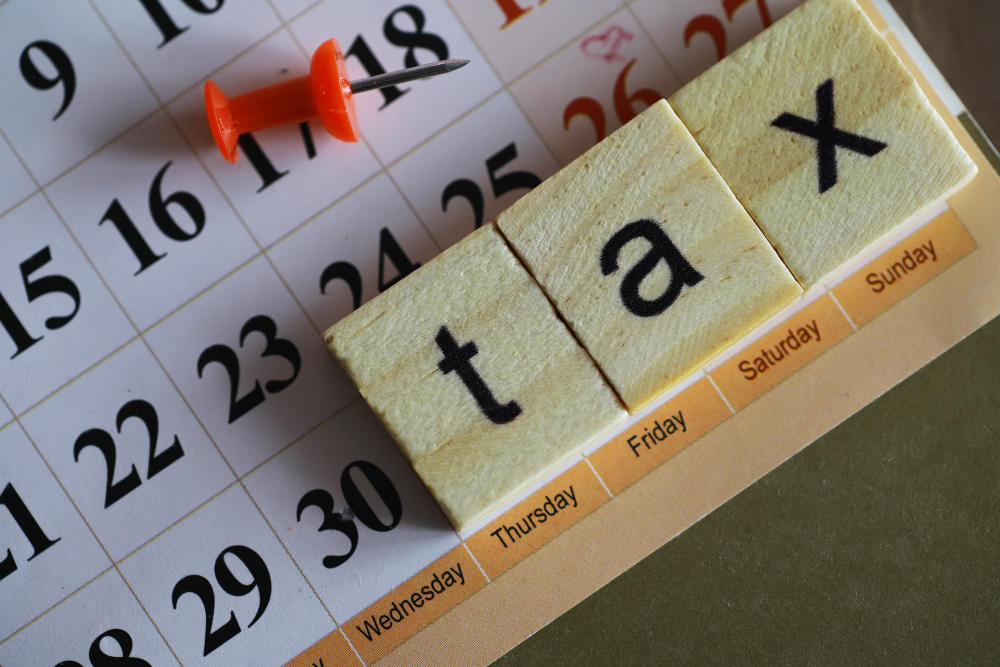
Working for yourself has a lot of upsides. Set your own hours, pick your clients, decide how the money flows. The downside is the IRS does not get patient with people who only think about taxes once a year. If you are self employed in South Carolina, freelancing, running an LLC, doing 1099 work, or pulling in income that nobody is withholding tax from, you owe quarterly estimated taxes. Missing those dates will cost you in penalties and interest, even if you pay the right total in April.
Here is how the system actually works, why those four payment dates exist, and what you should mark on your calendar before the year gets ahead of you.
Why Quarterly Payments Even Exist
The U.S. tax system is set up as pay as you go. People with regular jobs do not see this because their employer takes tax out of every paycheck and sends it to the IRS automatically. Self employed people skip that part. So if you waited until April to pay your full year’s tax bill in one shot, the IRS would charge you a penalty for paying late, even if your total payment is right.
Quarterly estimates fix that problem. You pay tax four times across the year so the government gets its money in roughly the same rhythm a W-2 worker pays through withholding.
You generally need to make quarterly payments if you expect to owe at least $1,000 in federal tax for the year after subtracting any withholding and refundable credits. That includes federal income tax and self employment tax, which is the 15.3% you pay on net earnings to cover Social Security and Medicare.
The 4 Dates for the 2026 Tax Year
Here are the federal due dates every South Carolina self employed person should write down right now.
Q1: April 15, 2026
This payment covers income earned from January 1 through March 31, 2026. It is also the same day your 2025 federal return is due, so if you are paying a balance for last year and an estimated payment for this year on the same day, do not mix them up. The IRS treats them as two separate payments and they go through different forms.
Q2: June 15, 2026
This one covers income from April 1 through May 31. Yes, two months, not three. The IRS calls these payments quarterly even though they do not fall on actual quarter ends. June 15 lands on a Monday in 2026, so no weekend bump.
Q3: September 15, 2026
This covers income from June 1 through August 31. September 15 falls on a Tuesday in 2026. This is the date most people forget, especially if business slowed down over the summer and the September deadline sneaks up.
Q4: January 15, 2027
The last payment covers income earned from September 1 through December 31, 2026. Note the year flip. The Q4 payment is due in 2027, but it counts toward your 2026 tax year.
There is one shortcut here. If you file your 2026 federal return and pay any remaining balance by February 1, 2027, you can skip the January 15 payment entirely. That option is built into the rules and used by people who close their books fast.
How to Figure Out How Much to Pay
Use Form 1040-ES from the IRS. The form includes a worksheet that walks through expected income, deductions, credits, and your projected tax. Most accounting software and tax preparation platforms can also calculate it.
The simplest approach is to take last year’s total federal tax bill, divide by four, and pay that amount each quarter. The IRS calls this the safe harbor rule. As long as you pay at least 100% of last year’s total tax across the four quarters, you avoid underpayment penalties even if you end up owing more in April. If your adjusted gross income last year was over $150,000, you have to pay 110% instead of 100%.
Income that bounces around month to month makes this trickier. A landscaper or wedding photographer might pull in 70% of their annual income between May and August. The IRS lets you use the annualized income method in those cases, which lines up payments with the months you actually earn the money. It is more paperwork, but it can save real cash.
Do Not Forget South Carolina State Estimates
This is where a lot of self employed people get caught. South Carolina has its own quarterly estimated tax system, and the dates line up with the federal ones. You file Form SC1040ES with the South Carolina Department of Revenue.
For the 2026 tax year, South Carolina cut its income tax rates under H. 4216, signed by the Governor in March. Income up to $30,000 is taxed at 1.99%, and income above $30,000 is taxed at 5.21% with a $966 credit. That sounds smaller than the old 6% top rate, but the math still adds up fast on a self employment year. State estimates are not optional, and the SCDOR also charges interest and penalties for missed payments. Treat the federal and state payments as a pair and pay them the same day.
Quick Tips to Stay Ahead
Set up a separate savings account just for taxes. Move 25% to 30% of every payment you receive into that account the same day the money lands. When the quarterly date hits, the cash is already there.
Pay online through IRS Direct Pay or EFTPS. It takes about three minutes, gives you a confirmation number, and skips the mail entirely. For state, use MyDORWAY on the SCDOR site.
Build the four dates into your phone calendar with a 10 day reminder. April 15, June 15, September 15, and January 15 should be permanent annual entries.
If income shifts midyear, recalculate. A great Q1 followed by a quiet Q3 means your original estimate is off, and adjusting before December is a lot easier than dealing with the surprise in April.
Quarterly taxes feel annoying the first year. By year three, they are just a routine. Get the dates on the calendar, build the habit of moving money aside, and you will never face an April tax bill that wrecks your cash flow.