
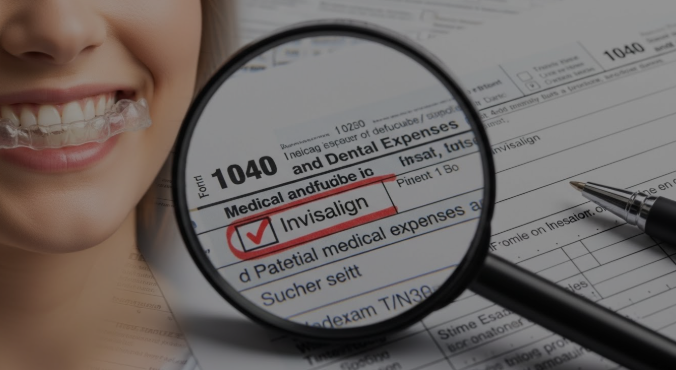
Paying for Invisalign can be a major financial commitment, often running into several thousand dollars. Naturally, many taxpayers want to know whether there’s any tax relief available. Can you claim Invisalign on taxes? The answer is not a simple yes or no it depends on medical necessity, how you file your taxes, and whether you meet specific IRS thresholds for more information and help visit JM ELITE BOOKS now.
This guide provides a complete, authoritative explanation based on IRS medical expense rules, so you can confidently determine whether Invisalign qualifies for a tax deduction in your situation.
Short Answer — Can You Claim Invisalign on Taxes?
Yes, you can claim Invisalign on taxes if it qualifies as a deductible medical expense and you itemize your deductions.
Generally, you may qualify if:
- Invisalign is medically necessary, not purely cosmetic
- The expense is not reimbursed by insurance
- Your total medical expenses exceed 7.5% of your adjusted gross income (AGI)
You generally do not qualify if:
- Invisalign is used solely for cosmetic reasons
- You take the standard deduction instead of itemizing
- The cost is fully reimbursed by insurance, HSA, or FSA funds
Under IRS rules, orthodontic treatments including Invisalign can be deductible medical expenses when they are intended to treat or prevent a medical condition.
Understanding How Medical Expenses Work for Taxes
To determine whether Invisalign is deductible, it’s important to understand how the IRS defines medical expenses.
What the IRS Considers a Deductible Medical Expense
The IRS allows deductions for expenses paid for the diagnosis, cure, mitigation, treatment, or prevention of disease, as well as treatments affecting any part or function of the body.
Examples include:
- Dental and orthodontic treatments
- Medical devices and appliances
- Treatments prescribed by licensed professionals
Medical vs Cosmetic Treatments
Cosmetic procedures are generally not deductible if they are done solely to improve appearance. However, a procedure that also improves function or treats a condition may qualify even if it has cosmetic benefits.
Why Orthodontic Treatment Is Treated Differently
Orthodontics often sit in a gray area. While braces or aligners can improve appearance, they may also:
- Correct bite alignment
- Reduce jaw pain or TMJ disorders
- Prevent long-term dental complications
This functional component is what makes Invisalign potentially deductible.
Can You Claim Invisalign on Taxes Under IRS Medical Expense Rules?
Under IRS medical expense rules, you can claim Invisalign on taxes if it is medically necessary.
Key factors include:
- A documented diagnosis (e.g., malocclusion, TMJ, bite dysfunction)
- Treatment recommended by a licensed dentist or orthodontist
- A primary purpose beyond cosmetic enhancement
Both adults and children may qualify. Adult treatment is not excluded, but it must meet the same medical necessity standard as treatment for a child.
When Invisalign Is Tax Deductible
Invisalign is most likely deductible when it addresses a clear medical or dental issue.
Common Medical Necessity Scenarios
- Severe overbite or underbite
- Crossbite causing uneven tooth wear
- Jaw alignment problems
- TMJ or chronic jaw pain
- Speech or chewing difficulties linked to alignment
Doctor-Prescribed Orthodontic Treatment
If a dentist or orthodontist prescribes Invisalign as part of a treatment plan to correct a medical issue, this strengthens the case for deductibility.
Invisalign for Dependents
You may deduct Invisalign costs paid for:
- Your child
- Your spouse
- Any dependent you claim on your tax return
As long as you paid the expense and meet the AGI threshold, dependent treatment can qualify.
When Invisalign Is NOT Tax Deductible
There are clear situations where Invisalign does not qualify.
Cosmetic-Only Orthodontics
If the treatment is purely to straighten teeth for appearance without functional or medical justification—it is not deductible.
General Appearance Improvement
Mild spacing or crowding corrected solely for aesthetics does not meet IRS medical standards.
Elective Adult Treatment Without Medical Justification
Adults seeking Invisalign for confidence or cosmetic enhancement alone generally cannot claim it on taxes.
People Also Ask — Common Invisalign Tax Questions
Is Invisalign considered a medical expense?
Yes, if it treats or prevents a dental or medical condition.
Can adults deduct Invisalign on taxes?
Yes, adults can deduct Invisalign if it is medically necessary and all IRS requirements are met.
Can you claim Invisalign for your child?
Yes, Invisalign for dependents is often deductible if medically necessary.
Does insurance reimbursement affect deductibility?
Yes. Only unreimbursed expenses can be deducted.
Can Invisalign be paid with an HSA or FSA?
Yes. Invisalign usually qualifies for HSA and FSA funds, which may eliminate the need for a tax deduction.
What tax year can Invisalign be claimed?
You claim expenses in the year you actually paid them, not when treatment began.
How to Claim Invisalign on Your Taxes
Step 1: Confirm Medical Necessity
Request documentation from your orthodontist explaining the medical purpose of treatment.
Step 2: Check If You Itemize Deductions
Invisalign can only be deducted if you itemize using Schedule A.
Step 3: Calculate Total Eligible Medical Expenses
Include all qualifying medical and dental costs paid during the year.
Step 4: Apply the IRS AGI Threshold
Only expenses exceeding 7.5% of your AGI are deductible.
Step 5: Gather Documentation
Keep:
- Receipts and invoices
- Treatment plans
- Insurance statements
- Proof of payment
Step 6: Report Invisalign on Schedule A
List Invisalign under “Medical and Dental Expenses” on Schedule A of Form 1040.
Invisalign vs Other Orthodontic Options — Tax Comparison Table
| Orthodontic Option | Potentially Deductible? | Medical Necessity Required? | Common Use Case |
|---|---|---|---|
| Invisalign | Yes | Yes | Bite correction, alignment issues |
| Traditional Metal Braces | Yes | Yes | Severe misalignment |
| Ceramic Braces | Yes | Yes | Functional correction with aesthetic benefit |
| Lingual Braces | Yes | Yes | Complex orthodontic issues |
| Generic Clear Aligners | Sometimes | Yes | Mild to moderate medical cases |
FAQs About Claiming Invisalign on Taxes
Can Invisalign be deducted if partially cosmetic?
Only the medically necessary portion may qualify, if it can be clearly separated.
Can payment plans be deducted?
Yes, but only the amounts actually paid during the tax year.
Can Invisalign be deducted if insurance paid part?
Only the out-of-pocket portion is deductible.
Is Invisalign deductible for self-employed individuals?
Yes, under the same medical expense rules.
Can Invisalign be claimed if paid with HSA/FSA?
No. Expenses paid with pre-tax HSA or FSA funds cannot be deducted again.
Do retainers count as deductible medical expenses?
Yes, if they are part of medically necessary orthodontic treatment.
What proof does the IRS require?
Receipts, medical documentation, and proof of payment.
Can Invisalign be claimed in multiple tax years?
Yes, if payments are made over multiple years, each year’s payments are claimed separately.
Conclusion — Should You Claim Invisalign on Your Taxes?
So, can you claim Invisalign on taxes? In many cases, yes but only when the treatment is medically necessary, unreimbursed, and you itemize deductions. The IRS draws a clear line between cosmetic enhancements and legitimate medical care, making documentation and intent critical.
If your Invisalign treatment corrects functional dental issues and your medical expenses exceed the AGI threshold, claiming it could provide meaningful tax savings. When in doubt, consult a tax professional to ensure compliance and maximize your eligible deductions.