
All About Financial Reporting in Management?
Financial reporting in management refers to the process of collecting, analyzing, and presenting financial data to help managers make informed decisions. It provides a clear picture of a company’s performance, cash flow, profitability, and risks.
This information matters because it drives transparency, improves strategy, and enables leaders to make decisions that strengthen business performance and long-term stability.
Core Explanation of Financial Reporting in Management
What Is Financial Reporting in Management?
Financial reporting in management is the internal-facing practice of preparing financial information specifically for use by executives, department heads, and management teams. Unlike traditional financial reporting which follows GAAP/IFRS and is used for external stakeholders like investors and regulators—management financial reporting is focused on internal decision-making.
Where external reports emphasize compliance, management reporting emphasizes insight. It sits at the core of management accounting, turning raw financial data into actionable intelligence used to guide budgets, forecasts, projects, and operational improvements.
Key Principles Behind Management Financial Reporting
Effective managerial reporting relies on five foundational principles:
- Accuracy: Reports must reflect true financial data without errors or distortions.
- Timeliness: Management needs up-to-date information to make fast decisions.
- Relevance: Only meaningful, decision-focused data should be included.
- Comparability: Data should be consistent over time for easy trend analysis.
- Actionability: Reports should lead to clear next steps, not just numbers.
Objectives of Financial Reporting in Management
Management financial reporting serves several key purposes:
- Performance evaluation: Identifying strengths, weaknesses, and trends.
- Budgeting and forecasting: Guiding short- and long-term financial planning.
- Identifying inefficiencies: Highlighting areas where costs or resources can be optimized.
- Strategic planning: Supporting long-term investments, expansion, or restructuring.
- Financial stability: Assessing risks and maintaining the financial health of the business.
Components of Management Financial Reporting
Financial Statements Used in Managerial Reporting
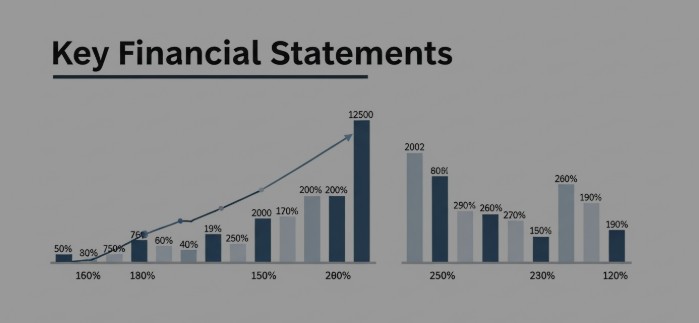
Managers rely on standard financial statements, including:
- Income statement: Shows profitability over a period.
- Balance sheet: Displays assets, liabilities, and equity.
- Cash flow statement: Tracks cash movement across operations, investing, and financing.
- Statement of changes in equity: Helps understand capital structure shifts.
Internal Reports Unique to Management
In addition to financial statements, management reporting includes:
- Budget reports: Planned vs actual spending.
- Forecast reports: Predictions of future results based on current data.
- Variance analysis: Identifies deviations from expected performance.
- KPI dashboards: Real-time insights into performance metrics.
Data & Metrics Commonly Used
Management relies on measurable indicators such as:
- Liquidity ratios (current ratio, quick ratio)
- Profitability metrics (gross margin, net margin, ROI)
- Efficiency KPIs (inventory turnover, employee productivity)
- Cash flow indicators (operating cash flow, burn rate)
How Financial Reporting Supports Management Decisions
Strategic Decision-Making
Financial reports guide high-level planning, such as:
- Evaluating expansion opportunities
- Considering mergers or acquisitions
- Assessing long-term capital investments
Operational Decision-Making
Daily and weekly decisions also depend on financial data:
- Adjusting budgets
- Improving cost control
- Allocating resources to the most productive areas
Risk & Performance Management
Consistent reporting helps management:
- Identify early financial risks
- Identify potential cash flow issues
- Track performance against goals
People Also Ask — Related Sub-Questions
Why Is Financial Reporting Important in Management?
It ensures leaders understand financial realities, enabling smarter decisions and better planning.
What Are the Types of Financial Reporting Used by Managers?
Financial statements, internal reports, variance analyses, KPI dashboards, and forecast reports.
How Does Financial Reporting Improve Business Performance?
It highlights opportunities, prevents mistakes, and ensures resources are optimized.
What Is the Difference Between Management Reporting and Financial Reporting?
Management reporting supports internal decisions, while financial reporting ensures external compliance.
Who Is Responsible for Financial Reporting in Management?
Finance teams, accountants, analysts, and department managers all contribute.
Step-by-Step Guide – How to Do Financial Reporting in Management
Step 1: Collect Financial and Operational Data
Gather data from accounting systems, sales platforms, payroll systems, and operations.
Step 2: Organize Data into Standardized Formats
Use templates or reporting software to ensure consistency.
Step 3: Analyze Key Metrics and Variances
Identify patterns, compare actual vs expected results, and evaluate KPIs.
Step 4: Prepare Internal & External Financial Reports
Compile information into dashboards, summaries, statements, or detailed reports.
Step 5: Present Insights to Management
Share insights through presentations, visual dashboards, or executive summaries.
Step 6: Use Insights to Guide Strategy & Improvements
Turn information into action adjust budgets, optimize processes, or redesign workflows.
Step 7: Review, Update & Monitor Regularly
Financial reporting is not a one-time task. Maintain weekly, monthly, or quarterly reporting cycles.
Types of Financial Reporting in Management
| Type of Report | Purpose | Frequency | Used By | Primary Insights |
|---|---|---|---|---|
| Internal Management Reports | Decision-making | Daily/Weekly/Monthly | Managers | KPIs, forecasts, variances |
| External Financial Reports | Compliance | Quarterly/Annually | Investors, regulators | Profitability, financial position |
| Budget Reports | Planning | Annual/Quarterly | Finance, executives | Expected vs actual performance |
| KPI Dashboards | Quick insights | Real-time | All departments | Operational & financial health |
Challenges in Financial Reporting for Management
Data Accuracy Issues
Incorrect data can lead to flawed decisions and misaligned strategies.
Lack of Standardization Across Departments
Different formats make comparison and consolidation difficult.
Slow or Manual Reporting Processes
Manual spreadsheets slow down decision-making and increase risk of errors.
Misinterpretation of Financial Data
Without financial literacy, managers may misunderstand insights.
Technology & Software Limitations
Outdated tools prevent automation and real-time visibility.
Best Practices for Effective Management Financial Reporting
Use Standardized Templates
Consistency improves accuracy and comparability.
Automate Reporting Where Possible
Use modern tools to reduce errors and improve speed.
Focus on Actionable Insights, Not Just Numbers
Prioritize conclusions, recommendations, and impact.
Maintain Consistent Reporting Cycles
Regular reporting creates clarity and momentum.
Encourage Cross-Department Collaboration
Involving multiple departments improves data quality and interpretation.
How Different Sectors Use Financial Reporting
Healthcare
Tracks patient service costs, billing cycles, and staffing efficiency.
Manufacturing
Monitors production costs, inventory turnover, and supply chain performance.
Retail & E-commerce
Uses sales trends, customer behavior, and inventory metrics to improve profitability.
Service-Based Businesses
Focuses on labor costs, project profitability, and client lifetime value.
Startups & SMEs
Relies on reporting for cash flow management, investor updates, and growth planning.
FAQs About Financial Reporting in Management
1. What is financial reporting in management in simple words?
It is the process of using financial data to help managers make decisions.
2. How is management financial reporting different from accounting?
Accounting records transactions; management reporting interprets them for decision-making.
3. What are the main tools used for management financial reporting?
ERP systems, BI dashboards, accounting software, and spreadsheet tools.
4. Is management financial reporting mandatory?
It’s not legally required, but it is essential for effective business management.
5. What skills are needed to prepare financial reports for management?
Analytical thinking, financial literacy, forecasting, and software proficiency.
6. What software is used for financial reporting?
QuickBooks, SAP, Oracle, Power BI, Tableau, and Excel.
7. How often should management financial reports be generated?
Weekly, monthly, or quarterly depending on the business.
8. What mistakes do companies commonly make in financial reporting?
Manual errors, inconsistent reporting formats, outdated tools, and lack of analysis.
Conclusion
Financial reporting in management is the backbone of informed decision-making, smart budgeting, and long-term business growth. It transforms raw numbers into insights that guide strategy, improve efficiency, and safeguard financial stability.
Businesses that master managerial reporting gain a competitive advantage greater clarity, faster decisions, and stronger performance. By implementing best practices, using modern tools, and maintaining consistent reporting cycles, any organization can elevate its financial intelligence and make smarter, data-driven decisions.